
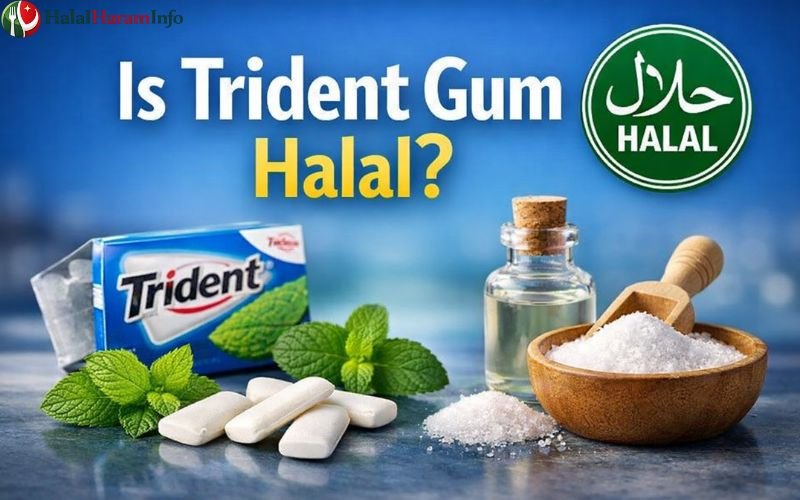
Chewing gum is a common everyday product, but for Muslims, the question of whether it is halal or haram matters. One popular brand that often comes up is Trident. This article explains in detail whether Trident gum is halal, what ingredients to watch for, and how to make informed choices.
What Is Trident Gum?
Trident is a well-known sugar-free chewing gum brand owned by Mondelez International. It is widely available worldwide and comes in various flavors such as mint, fruit, and cinnamon.
Most Trident products are marketed as sugar-free and often contain artificial sweeteners instead of sugar. While that may sound harmless, the halal status depends on the source and processing of its ingredients.
Is Trident Gum Halal or Haram?
Short Answer:
Trident gum is generally considered halal by many scholars, but it depends on specific ingredients and regional formulations.
Key Factors That Determine Halal Status
To understand whether Trident gum is halal, we need to look at its ingredients.
1. Gum Base
The gum base is one of the most important components. It is often a mix of synthetic and natural materials.
- Usually synthetic (petroleum-based) → Halal
- Rarely animal-derived → Needs verification
Most modern chewing gums, including Trident, use synthetic bases, making them generally permissible.
2. Sweeteners
Trident gum uses sugar substitutes such as:
| Sweetener | Source | Halal Status |
| Sorbitol | Plant-based | Halal |
| Xylitol | Plant-based | Halal |
| Aspartame | Synthetic | Halal |
| Mannitol | Plant-based | Halal |
These sweeteners are widely accepted as halal.
3. Flavorings
Flavorings can be:
- Natural
- Artificial
The concern is whether alcohol is used as a solvent in flavor extraction.
- If alcohol is used and evaporates completely → Many scholars allow it
- If alcohol remains in significant quantity → Doubtful
Related Post: Are Hot Cheetos Halal or Haram? Guide for Muslims
4. Glycerin (Glycerol)
Glycerin is sometimes used in chewing gum to maintain moisture.
| Source of Glycerin | Halal Status |
| Plant-based | Halal |
| Synthetic | Halal |
| Animal-based | Depends on source |
Most major brands today use plant or synthetic glycerin, but this is not always clearly stated on packaging.
5. Coating Agents
Some Trident gums have a hard outer shell made with:
- Carnauba wax (plant-based) → Halal
- Beeswax → Halal
These are generally safe.
Does Trident Gum Contain Gelatin?
No, most Trident gum products do not contain gelatin.
This is important because gelatin is often derived from non-halal animal sources. Its absence makes Trident more likely to be halal.
Is Trident Gum Certified Halal?
In most countries, Trident gum is not officially halal-certified. However:
- Lack of certification does not automatically mean haram
- It simply means verification is left to the consumer
Some regions may have halal-certified variants, so always check local packaging.
Regional Differences Matter
Ingredients can vary depending on where the gum is manufactured.
| Region | Halal Likelihood | Notes |
| USA | Generally Halal | No gelatin, synthetic base |
| Europe | Generally Halal | Similar formulations |
| Middle East | Often Halal | Sometimes certified |
| Asia | Varies | Check label carefully |
Scholarly Opinions
Islamic scholars generally agree on the following:
- Synthetic ingredients → Halal
- Plant-derived ingredients → Halal
- Animal-derived ingredients → Must be halal-slaughtered
If Trident gum contains only synthetic and plant-based components, it is considered permissible.
Related Post: Are Skittles Halal or Haram? Guide for Muslims
Is Trident Gum Vegan? (Helpful for Halal Check)
Trident gum is often labeled as vegan-friendly in many markets.
Why this matters:
- Vegan products contain no animal-derived ingredients
- This reduces the risk of haram components
However, vegan does not automatically mean halal (due to alcohol concerns), but it is a positive sign.
Quick Halal Verdict Table
| Factor | Status |
| Gum base | Halal (synthetic) |
| Sweeteners | Halal |
| Gelatin | Not present |
| Glycerin | Usually halal |
| Flavoring alcohol | Doubtful (minor concern) |
| Certification | Usually none |
Overall Verdict: Generally Halal with caution
When Should You Avoid Trident Gum?
You may want to avoid it if:
- You strictly require halal certification
- You are concerned about alcohol-based flavoring solvents
- Ingredient sources are unclear in your region.
Better Safe Alternatives
If you want complete peace of mind:
- Choose halal-certified chewing gums
- Look for products labeled “100% plant-based”
- Check local halal authority approvals
Tips to Check Halal Status of Gum
- Read the ingredient list carefully
- Look for hidden terms like:
- Glycerin
- Flavoring
- Emulsifiers
- Visit the manufacturer’s website
- Contact customer support if unsure
- Prefer halal-certified products when available
FAQs
1. Is Trident gum halal in Islam?
Yes, it is generally considered halal because it does not contain gelatin and uses mostly synthetic ingredients. However, lack of certification may concern some consumers.
2. Does Trident gum contain alcohol?
It may contain trace amounts of alcohol in flavorings, but these are usually minimal and often evaporated. Many scholars consider this permissible.
3. Is Trident gum suitable for strict halal diets?
Not always. If you follow strict guidelines requiring certification, you may prefer certified alternatives.
4. Is Trident gum vegetarian or vegan?
In many regions, yes. This suggests no animal-derived ingredients, which supports its halal status.
5. Is glycerin in Trident gum halal?
Most likely yes, as it is usually plant-based or synthetic. However, exact sourcing is not always disclosed.
6. Can Muslims chew Trident gum while fasting?
No. Chewing gum during fasting in Ramadan breaks the fast if any substances are swallowed or flavors dissolve.
Final Verdict
Trident gum is generally considered halal due to its synthetic gum base, absence of gelatin, and plant-based sweeteners. However, the lack of official halal certification and the possibility of alcohol-based flavoring agents make it a gray area for stricter consumers.
Bottom Line:
- Permissible for most Muslims
- Avoid if you require strict halal certification
