
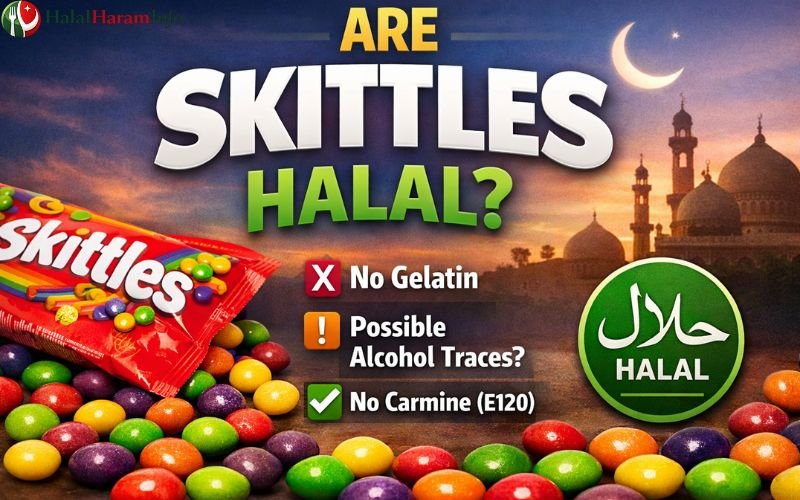
Skittles are one of the most popular chewy candies in the world, known for their bright colors and fruity flavors. Many Muslims often ask: are Skittles halal? The answer depends on ingredients, manufacturing processes, and regional variations.
This detailed guide explains everything you need to know in a clear and practical way.
Quick Answer: Are Skittles Halal?
| Factor | Status |
| Gelatin | ❌ Not present |
| Alcohol | ⚠️ Possible trace use in flavoring |
| Carmine (E120) | ❌ Not used in most versions |
| Halal Certification | ❌ Not widely certified |
| Overall Ruling | ⚠️ Generally considered halal by many, but depends on region |
Summary:
Most Skittles are generally considered halal, especially in regions where ingredients are plant-based. However, strict observers may avoid them due to unclear flavoring sources or lack of certification.
What Are Skittles Made Of?
To determine halal status, it’s important to look at the ingredients.
Common Ingredients in Skittles
| Ingredient | Source | Halal Status |
| Sugar | Plant | Halal |
| Corn Syrup | Plant | Halal |
| Hydrogenated Palm Kernel Oil | Plant | Halal |
| Citric Acid | Plant/Fermentation | Halal |
| Natural & Artificial Flavors | Mixed | ⚠️ Uncertain |
| Food Coloring | Synthetic/Plant | Usually Halal |
Key Takeaway
- Skittles do not contain gelatin, which is a major concern in many candies.
- Most ingredients are plant-based or synthetic, making them generally permissible.
Do Skittles Contain Gelatin?
No, Skittles do not contain gelatin.
This is important because gelatin is often derived from pork or non-halal slaughtered animals, which would make a product haram.
Instead, Skittles use:
- Plant-based binders
- Modified starches
This makes them different from many chewy candies like gummies.
Do Skittles Contain Alcohol?
This is where things become less clear.
Some flavors may use:
- Alcohol as a solvent in flavor extracts
Important Points:
- The alcohol is typically used in very small amounts
- It usually evaporates during processing
- It is not used for intoxication
Scholarly Views
| Opinion | Explanation |
| Permissible | If alcohol is minimal and not intoxicating |
| Avoid | If the source and process are unclear |
Conclusion:
Many scholars allow such trace use, but stricter individuals may prefer to avoid it.
Related Post: Are Takis Halal or Haram?
Do Skittles Contain Carmine (E120)?
Carmine is a red coloring made from insects and is considered haram by many scholars.
Skittles Status:
- Most modern Skittles do NOT use carmine
- They use synthetic colorings instead
However, always check packaging because formulations can change.
Are Skittles Halal in Different Countries?
Ingredients and manufacturing processes can vary by region.
United States
- No gelatin
- Artificial colors used
- No halal certification
Status: Generally considered halal
United Kingdom / Europe
- Similar formulation
- Some variations in flavorings
Status: Generally halal but check labels
Muslim Countries (e.g., Malaysia, Indonesia)
- Some versions may be halal certified
Status: More reliable if certified
Halal Certification: Do Skittles Have It?
Most Skittles products do not carry official halal certification.
What This Means:
- Ingredients may still be halal
- But no third-party verification is provided
For Strict Consumers:
Look for:
- Certified halal candies
- Products with clear labeling
Are Skittles Vegan? Does That Affect Halal Status?
Skittles are often labeled vegan, meaning:
- No animal-derived ingredients
- No gelatin or dairy
Does Vegan = Halal?
| Aspect | Vegan | Halal |
| No animal products | ✅ | ✅ |
| Alcohol concerns | ❌ | ⚠️ |
| Certification | ❌ | ⚠️ |
Conclusion:
Vegan does not automatically mean halal, but it is a positive indicator.
Related Post: Are Jolly Ranchers Halal for Muslims?
Ingredients to Watch in Skittles
Even though Skittles are mostly halal-friendly, keep an eye on:
1. Natural Flavors
- Source not always disclosed
- Could involve alcohol processing
2. Emulsifiers
- Usually plant-based, but verification helps
3. Colorings
- Synthetic colors are generally halal
- Avoid if carmine (E120) appears
Scholarly Opinions on Skittles
Scholars differ slightly based on interpretation.
Majority View
- Permissible due to absence of gelatin and pork derivatives
Conservative View
- Avoid due to:
- Unclear flavor sources
- Lack of certification
Practical Advice for Muslim Consumers
If you want to be careful:
Choose Skittles When:
- Ingredients are clearly plant-based
- No doubtful additives are listed
Avoid or Verify When:
- You follow strict halal standards
- You want certified products only
Alternatives to Skittles
If you prefer fully halal-certified candy, consider:
| Candy Type | Description |
| Halal gummy candies | Certified gelatin source |
| Fruit chews | Plant-based ingredients |
| Organic candies | Often simpler ingredients |
Related Post: Is Doritos Halal or Haram?
FAQs
Are Skittles halal in Islam?
Most scholars consider them halal because they do not contain gelatin or pork ingredients. However, some caution is advised due to flavoring processes.
Do Skittles contain pork?
No, Skittles do not contain pork or pork-derived ingredients.
Is the coloring in Skittles halal?
Yes, most Skittles use synthetic colors, which are generally halal. They typically do not use carmine.
Are Skittles halal for strict Muslims?
Not always. Strict Muslims may avoid them due to lack of certification and possible alcohol traces in flavorings.
Are Skittles safe for vegetarians and vegans?
Yes, Skittles are widely considered vegan, which supports their halal suitability, though it does not guarantee it.
Do Skittles contain alcohol?
Possibly in very small amounts used during flavor processing. This is a debated issue among scholars.
Final Verdict: Should You Eat Skittles?
Skittles are generally considered halal, especially in regions where ingredients are plant-based and free from animal derivatives.
However:
- They are not officially halal certified
- There may be minor concerns about flavoring processes
Simple Rule:
- Okay for most Muslims
- Avoid if you require strict certification
Conclusion
Skittles fall into a category of foods that are widely accepted but not universally certified. Their lack of gelatin and pork ingredients makes them suitable for many Muslims, but the absence of halal certification and minor uncertainties may lead some to avoid them.
If you prefer complete certainty, choose certified halal alternatives. Otherwise, Skittles can be enjoyed in moderation based on your level of comfort and understanding.
