
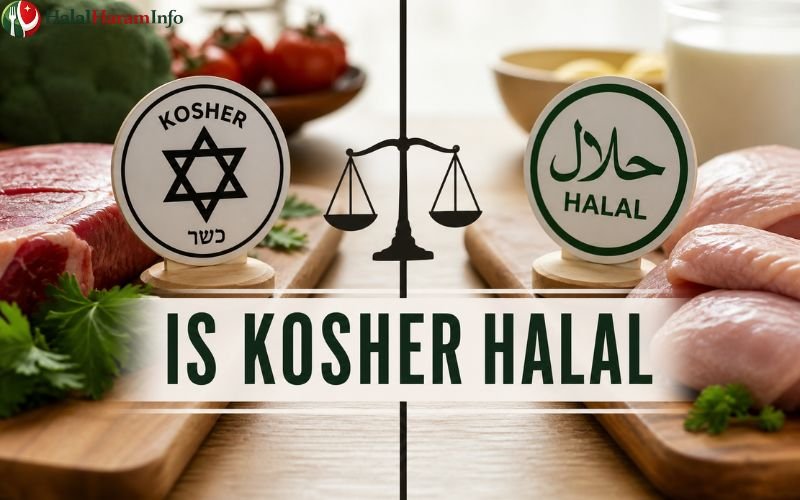
Many Muslims wonder whether kosher food is halal. Both halal and kosher dietary laws come from religious teachings and share several similarities. Because of this, some people assume kosher food is always halal. However, there are important differences between the two systems that Muslims should understand before eating kosher-certified products.
This guide explains what kosher and halal mean, how they are similar, where they differ, and whether Muslims can eat kosher food according to Islamic teachings.
What Does Kosher Mean?
Kosher is a dietary system followed in Judaism. The word “kosher” means fit or proper according to Jewish law. Foods that meet Jewish dietary rules are considered kosher.
Kosher laws are based on the Torah and include rules about:
- Permitted and forbidden animals
- Slaughter methods
- Separation of meat and dairy
- Food preparation and handling
- Ingredients and additives
Foods that are certified kosher usually carry a kosher symbol on the packaging.
What Does Halal Mean?
Halal is an Arabic term meaning permissible according to Islamic law. Muslims are allowed to consume halal foods and drinks while avoiding haram items.
Halal rules are based on the Quran and Sunnah and include:
- Permissible animals
- Proper Islamic slaughter
- Avoidance of pork and alcohol
- Cleanliness and purity
- Lawful ingredients and preparation
Many halal products are certified by recognized halal organizations.
Is Kosher Halal?
Kosher food is not always halal, but some kosher foods may be permissible for Muslims. Both kosher and halal dietary laws prohibit pork and require religious slaughter, which is why they are often compared. However, halal rules in Islam are stricter in some areas.
For example, halal food cannot contain alcohol, while some kosher products may include it. In addition, many Muslim scholars prefer meat that is slaughtered according to Islamic methods with the name of Allah mentioned during slaughter. Because of these differences, Muslims should carefully check ingredients and certifications before eating kosher products.
Quick Comparison Table: Kosher vs Halal
| Feature | Kosher | Halal |
| Religious Origin | Judaism | Islam |
| Pork Allowed | No | No |
| Alcohol Allowed | Limited use in some products | No |
| Requires God’s Name During Slaughter | Jewish blessing | Allah’s name required |
| Meat and Dairy Mixed | Not allowed | Allowed if ingredients are halal |
| Seafood Rules | Limited | Most seafood allowed by many scholars |
| Blood Consumption | Forbidden | Forbidden |
| Slaughter Method | Shechita | Dhabiha |
Are Kosher Foods Automatically Halal?
No, kosher foods are not automatically halal.
Although kosher and halal share similarities, some kosher foods may still contain ingredients or preparation methods that are not acceptable in Islam.
For example:
- Kosher products may contain alcohol
- Certain kosher cheeses may use non-halal enzymes
- Kosher meat may not meet all Islamic slaughter requirements according to many scholars
- Kosher gelatin may come from sources not considered halal
Because of these differences, Muslims should check ingredients and certifications carefully.
Related Post: Is Nerds Gummy Clusters Halal or Haram?
Similarities Between Kosher and Halal
There are several reasons why people compare kosher and halal foods.
1. Pork Is Forbidden
Both Muslims and Jews are prohibited from eating pork and pork by-products.
This includes:
- Bacon
- Ham
- Pork gelatin
- Lard
2. Blood Is Forbidden
Both religions prohibit consuming blood. Animals must be slaughtered in a way that drains blood from the body.
3. Religious Slaughter Matters
Halal and kosher meat both require religious slaughter procedures. The animal must be healthy and slaughtered properly.
4. Cleanliness Is Important
Both dietary systems emphasize hygiene, cleanliness, and proper food handling.
5. Certain Animals Are Forbidden
Predatory animals and some other species are forbidden in both religions.
Main Differences Between Kosher and Halal
Despite the similarities, there are major differences Muslims should know.
1. Alcohol Rules
One of the biggest differences is alcohol.
In Islam
Alcohol is generally prohibited in foods and drinks.
In Kosher Laws
Some alcoholic drinks are kosher, including kosher wine.
This means a product labeled kosher may still contain alcohol and would not be halal.
2. Slaughter Requirements
Islamic slaughter requires mentioning the name of Allah during slaughter.
Kosher slaughter involves Jewish blessings and follows Jewish religious law.
Some Islamic scholars consider kosher meat from the People of the Book permissible, while others require explicit Islamic slaughter standards.
3. Meat and Dairy Mixing
Kosher law strictly forbids mixing meat and dairy products.
For example:
- Cheeseburgers are not kosher
- Meat cooked with butter may not be kosher
Islam does not prohibit mixing halal meat and dairy.
4. Seafood Rules
Kosher laws only permit seafood with fins and scales.
Examples of non-kosher seafood:
- Shrimp
- Crab
- Lobster
In Islam, many scholars allow all seafood, though opinions vary among schools of thought.
Related Post: Is Octopus Halal or Haram? Islamic Guide (2026)
Is Kosher Meat Halal?
This question has different scholarly opinions.
Opinion 1: Kosher Meat Can Be Halal
Some scholars believe kosher meat is permissible because Jews are considered People of the Book.
They refer to Quran verse 5:5, which states that the food of the People of the Book is lawful for Muslims.
According to this view:
- Kosher slaughter fulfills the religious slaughter condition
- Jews worship the same God
- Proper slaughter and blood draining are performed
Opinion 2: Kosher Meat Is Not Necessarily Halal
Other scholars believe kosher meat is not fully halal because:
- Allah’s name may not be mentioned individually on each animal
- Stunning methods may differ
- Some slaughter practices may not meet Islamic standards
These scholars advise Muslims to choose certified halal meat whenever possible.
Scholarly View Summary Table
| View | Explanation |
| Kosher meat is permissible | Based on food of People of the Book |
| Kosher meat is doubtful | Slaughter method may differ from halal |
| Halal-certified meat preferred | Ensures full Islamic compliance |
Can Muslims Eat Kosher Snacks and Packaged Foods?
Sometimes yes, but ingredients must still be checked carefully.
A kosher label only confirms compliance with Jewish dietary laws, not Islamic halal standards.
Ingredients Muslims Should Watch For
| Ingredient | Halal Concern |
| Alcohol | Haram in Islam |
| Gelatin | Source may not be halal |
| Enzymes | Could come from non-halal animals |
| Emulsifiers | Animal-based ingredients possible |
| Flavorings | May contain alcohol |
Understanding Kosher Symbols
Many packaged foods include kosher certification symbols.
Common symbols include:
| Symbol | Meaning |
| OU | Orthodox Union Kosher |
| KOF-K | Kosher certification agency |
| Star-K | Kosher certified |
| OK | Kosher certification mark |
These symbols confirm kosher status but not halal status.
Is Kosher Gelatin Halal?
Kosher gelatin is not always halal.
Gelatin can come from:
- Beef
- Fish
- Pork
Kosher certification prevents pork use in many cases, but the animal source and slaughter method may still not meet halal requirements.
Muslims should look for:
- Halal-certified gelatin
- Fish gelatin
- Plant-based alternatives
Related Post: Is Alligator Halal or Haram?
Is Kosher Cheese Halal?
Kosher cheese may or may not be halal.
Cheese production often uses enzymes called rennet. If the enzymes come from non-halal animal sources, the cheese may not be halal even if it is kosher.
Some kosher cheeses are acceptable to Muslims, while others are not.
Is Kosher Wine Halal?
No, kosher wine is not halal.
Even though it is kosher according to Jewish law, Islam prohibits intoxicating drinks.
This includes:
- Wine
- Beer
- Liquor
- Alcoholic flavorings
When Can Muslims Eat Kosher Food?
Some Muslims choose kosher food when halal food is unavailable, especially in non-Muslim countries.
This often applies to:
- Vegetarian kosher products
- Seafood products
- Certain packaged snacks
- Dairy items without questionable ingredients
However, Muslims should still read ingredient labels carefully.
Tips for Muslims Buying Kosher Products
1. Read the Ingredient List
Always check for:
- Alcohol
- Gelatin
- Animal enzymes
- Unknown additives
2. Prefer Halal Certification
Halal certification provides stronger assurance for Muslims.
3. Choose Vegetarian or Seafood Options
Vegetarian kosher foods may reduce concerns about meat sources.
4. Research the Brand
Some companies provide detailed ingredient sourcing information online.
5. Ask Scholars if Unsure
If a product is doubtful, consult a trusted Islamic scholar.
Kosher vs Halal Food Categories
| Food Type | Kosher Status | Halal Status |
| Pork | Forbidden | Forbidden |
| Beef | Allowed with kosher slaughter | Allowed with halal slaughter |
| Chicken | Allowed with kosher slaughter | Allowed with halal slaughter |
| Wine | Allowed if kosher-certified | Forbidden |
| Cheese | Depends on ingredients | Depends on ingredients |
| Seafood | Limited types allowed | Mostly allowed |
| Gelatin | Depends on source | Depends on source |
Why Some Muslims Prefer Kosher Over Non-Certified Foods
In areas where halal food is difficult to find, some Muslims may prefer kosher-certified products because:
- Pork is avoided
- Religious slaughter is performed
- Ingredient oversight exists
- Food standards are strict
However, this does not automatically make every kosher product halal.
Related Post: Is Pork Halal or Haram?
Common Misunderstandings About Kosher and Halal
“Kosher and halal are exactly the same.”
This is incorrect. They share similarities but have important differences.
“All kosher meat is halal.”
Scholars differ on this issue. Many Muslims still prefer certified halal meat.
“Kosher means alcohol-free.”
Kosher products can contain alcohol.
“Kosher certification replaces halal certification.”
Kosher certification only confirms compliance with Jewish dietary laws.
FAQs
Is kosher food halal for Muslims?
Some kosher foods may be halal, but not all. Muslims should check ingredients and certifications carefully.
Can Muslims eat kosher meat?
Scholars have different opinions. Some allow it based on Quranic teachings about the People of the Book, while others prefer only halal-certified meat.
Is kosher chicken halal?
It depends on the slaughter process and scholarly interpretation.
Is kosher gelatin halal?
Not always. The source and slaughter method matter.
Is kosher wine halal?
No. Alcoholic drinks are prohibited in Islam.
Is kosher cheese halal?
Some kosher cheeses may be halal, but ingredient sources should be verified.
Why do halal and kosher foods seem similar?
Both religions have dietary laws that prohibit pork, blood, and improper slaughter.
Is vegetarian kosher food halal?
Usually, vegetarian kosher foods are more likely to be halal if they do not contain alcohol or other haram ingredients.
Final Thoughts
Kosher and halal dietary systems share many similarities, including restrictions on pork and blood and the importance of religious slaughter. However, they are not identical.
Kosher food is not automatically halal because some kosher products may contain alcohol, questionable enzymes, or meat that does not fully meet Islamic slaughter requirements.
For Muslims, the safest option is to choose certified halal products whenever available. If halal food is unavailable, some kosher foods may be acceptable depending on the ingredients and scholarly opinion followed.
Carefully reading labels, understanding certifications, and consulting knowledgeable scholars can help Muslims make informed food choices with confidence.
