
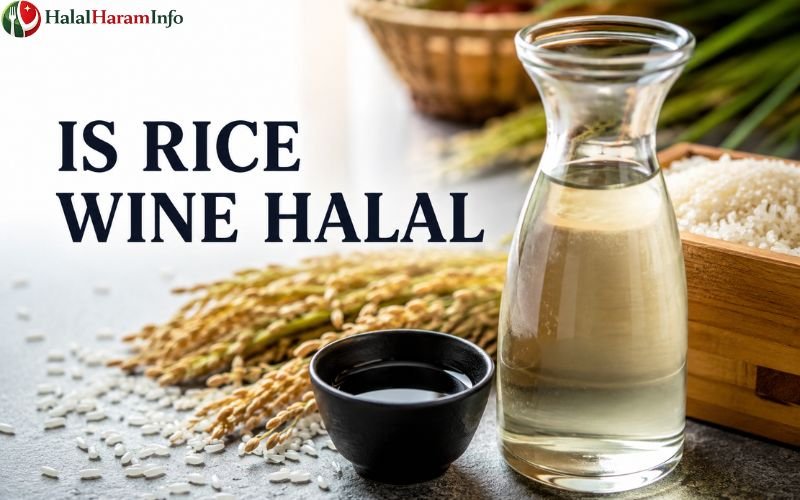
Rice wine is a common ingredient in many Asian cuisines, especially Chinese, Japanese, and Korean dishes. Because the word “wine” is associated with alcohol, many Muslims wonder whether rice wine is halal or haram.
The answer is not always straightforward. Some rice-based products contain significant amounts of alcohol, while others are alcohol-free substitutes. Understanding the ingredients, production methods, and Islamic rulings can help Muslims make informed dietary choices.
This guide explains everything you need to know about rice wine, its halal status, scholarly opinions, and suitable alternatives.
What Is Rice Wine?
Rice wine is an alcoholic beverage made by fermenting rice. Unlike grape wine, which is produced from fruit sugars, rice wine is created when the starches in rice are converted into sugars and then fermented into alcohol.
Rice wine is widely used in several Asian countries for cooking and drinking.
Common types of rice wine include:
| Rice Wine Type | Country of Origin | Alcohol Content |
| Sake | Japan | 13%–17% |
| Shaoxing Wine | China | 14%–20% |
| Makgeolli | Korea | 6%–9% |
| Mirin | Japan | Usually 10%–14% |
| Rice Cooking Wine | Various | Varies |
Since these products are produced through fermentation, they generally contain alcohol.
Is Rice Wine Halal?
In most cases, rice wine is considered haram because it contains alcohol produced through fermentation.
According to the majority of Islamic scholars, intoxicating beverages are prohibited regardless of their source. Since rice wine can intoxicate when consumed in sufficient quantities, it falls under the prohibition of alcoholic drinks.
Short Answer
| Product | Halal Status |
| Traditional rice wine | Haram |
| Sake | Haram |
| Shaoxing wine | Haram |
| Makgeolli | Haram |
| Mirin containing alcohol | Haram |
| Alcohol-free rice wine substitute | Usually halal |
Therefore, traditional rice wine is generally not considered halal.
Related Post: Is Wingstop Halal? A Complete Guide for Muslim Consumers
Why Is Rice Wine Considered Haram?
The primary reason is its alcohol content.
Rice wine undergoes a fermentation process that intentionally creates alcohol. The resulting beverage is consumed as an alcoholic drink in many cultures.
Islam prohibits intoxicants because they can impair judgment and lead to harmful consequences.
Key Reasons
- Contains intoxicating alcohol.
- Produced specifically through fermentation.
- Consumed as an alcoholic beverage.
- Falls under the general prohibition of intoxicants in Islamic teachings.
For these reasons, most scholars classify rice wine as haram.
What Does Islam Say About Alcohol?
Islamic teachings clearly prohibit intoxicating drinks.
A commonly cited principle states that anything which intoxicates in large amounts is forbidden, and even small amounts of such substances are not permissible for consumption.
Since traditional rice wine is an intoxicating beverage, it falls within this category according to the majority of scholars.
Is Cooking With Rice Wine Halal?
This is one of the most frequently asked questions.
Many Asian recipes use rice wine to enhance flavor, tenderize meat, or remove strong odors from seafood.
Examples include:
- Stir-fries
- Marinades
- Sauces
- Soups
- Noodle dishes
Majority Scholarly Opinion
Most scholars consider cooking with rice wine impermissible because:
- The ingredient itself is alcoholic.
- Alcohol is intentionally added to the food.
- Not all alcohol necessarily evaporates during cooking.
Therefore, many Muslims choose to avoid dishes prepared with rice wine.
Alternative Opinion
Some scholars discuss situations where alcohol completely transforms or disappears during cooking. However, opinions vary, and many Muslims prefer avoiding rice wine altogether to eliminate doubt.
Related Post: Is Chick-fil-A Halal? (2026 Complete Guide)
Does Alcohol Completely Evaporate During Cooking?
A common belief is that all alcohol disappears when food is cooked.
Scientific studies show that complete evaporation does not always occur. The amount remaining depends on:
- Cooking temperature
- Cooking time
- Preparation method
- Quantity used
Alcohol Retention During Cooking
| Cooking Method | Possible Alcohol Remaining |
| Quick flambé | Significant amount may remain |
| Short simmering | Moderate amount may remain |
| Long cooking | Reduced but not always eliminated |
| Overnight storage | Some alcohol may still be present |
Because alcohol may remain in the final dish, many scholars advise avoiding recipes that contain rice wine.
Is Japanese Sake Halal?
Sake is one of the most famous forms of rice wine.
It is produced by fermenting polished rice and contains a relatively high alcohol percentage.
Sake Overview
| Feature | Details |
| Main Ingredient | Rice |
| Production Method | Fermentation |
| Alcohol Content | Usually 13%–17% |
| Halal Status | Haram |
Since sake is an alcoholic beverage, it is generally considered haram.
Is Shaoxing Wine Halal?
Shaoxing wine is a Chinese rice wine commonly used in cooking.
Many restaurant dishes contain this ingredient because it adds aroma and depth of flavor.
Shaoxing Wine Overview
| Feature | Details |
| Origin | China |
| Type | Rice wine |
| Alcohol Content | Approximately 14%–20% |
| Halal Status | Haram |
Muslims should carefully check ingredients when eating Chinese dishes, as Shaoxing wine is commonly used in sauces and marinades.
Related Post: Is Dave’s Hot Chicken Halal? (Complete 2026 Guide)
Is Mirin Halal?
Mirin is a Japanese sweet rice wine frequently used in:
- Teriyaki sauce
- Glazes
- Marinades
- Japanese soups
Traditional mirin contains alcohol.
Mirin Types
| Type | Alcohol Content | Halal Status |
| Traditional Mirin | 10%–14% | Haram |
| Mirin-Style Seasoning | Varies | Check ingredients |
| Alcohol-Free Mirin Substitute | 0% | Usually halal |
Always read product labels before purchasing.
Can Muslims Eat Food From Restaurants That Use Rice Wine?
The answer depends on the ingredients used.
Many Asian restaurants use rice wine in:
- Fried rice
- Stir-fried noodles
- Beef dishes
- Seafood dishes
- Dumpling fillings
- Sauces
Recommended Approach
Ask restaurant staff:
- Does the dish contain rice wine?
- Is sake used in the sauce?
- Is Shaoxing wine added during cooking?
- Are alcohol-free alternatives available?
Many restaurants are willing to accommodate halal dietary requests.
How to Identify Rice Wine in Ingredient Lists
Rice wine can appear under different names on food labels.
Related Post: Is CAVA Halal? Complete Guide for Muslim Customers
Common Names for Rice Wine
| Name on Label | Usually Contains Alcohol |
| Rice wine | Yes |
| Cooking wine | Usually yes |
| Shaoxing wine | Yes |
| Sake | Yes |
| Mirin | Usually yes |
| Rice cooking wine | Usually yes |
| Fermented rice wine | Yes |
Checking labels carefully helps avoid accidental consumption.
Halal Alternatives to Rice Wine
Fortunately, several halal substitutes can provide similar flavor without alcohol.
Popular Halal Alternatives
| Alternative | Best Use |
| Rice vinegar | Stir-fries |
| White grape juice | Sweet dishes |
| Apple juice | Marinades |
| Lemon juice | Sauces |
| Vegetable broth | Soups |
| Alcohol-free cooking wine substitute | General cooking |
These alternatives can often replace rice wine successfully in recipes.
Rice Wine vs Rice Vinegar
Many people confuse rice wine with rice vinegar.
They are different products.
Comparison Table
| Feature | Rice Wine | Rice Vinegar |
| Contains Alcohol | Yes | Usually no |
| Production | Fermented into alcohol | Further processed into vinegar |
| Taste | Sweet and alcoholic | Mildly acidic |
| Halal Status | Generally haram | Generally halal |
| Cooking Use | Flavoring and marinades | Dressings and sauces |
Rice vinegar is often a safer choice for Muslims, but it is still wise to verify ingredients.
Are All Rice-Based Products Haram?
No. Rice itself is completely halal.
Only products that become intoxicating through fermentation raise halal concerns.
Rice Products and Their Status
| Product | Halal Status |
| Plain rice | Halal |
| Rice flour | Halal |
| Rice noodles | Halal |
| Rice cakes | Halal |
| Rice vinegar | Usually halal |
| Rice wine | Haram |
| Sake | Haram |
The concern is not the rice itself but the alcoholic fermentation process.
Related Post: Is Starburst Halal? Complete Guide for Muslim Consumers
Tips for Muslims When Buying Asian Food Products
To avoid uncertainty, consider the following tips:
Check the Ingredient List
Look for:
- Rice wine
- Cooking wine
- Mirin
- Sake
- Shaoxing wine
Look for Halal Certification
Halal-certified products are generally safer choices.
Contact the Manufacturer
If ingredients are unclear, contacting the manufacturer can provide clarification.
Use Trusted Halal Alternatives
Many stores now sell alcohol-free cooking products specifically designed as substitutes for rice wine.
Frequently Asked Questions
Is rice wine halal or haram?
Traditional rice wine is generally considered haram because it contains intoxicating alcohol produced through fermentation.
Can Muslims cook with rice wine?
Most scholars advise against cooking with rice wine because it is an alcoholic ingredient.
Is sake halal?
No. Sake is a fermented alcoholic rice beverage and is generally considered haram.
Is Shaoxing wine halal?
No. Shaoxing wine contains alcohol and is generally regarded as haram.
Is rice vinegar halal?
Rice vinegar is generally considered halal because it is vinegar rather than an intoxicating alcoholic beverage.
Does cooking remove all alcohol from rice wine?
Not necessarily. Studies show that some alcohol may remain depending on cooking time and method.
What can replace rice wine in cooking?
Rice vinegar, apple juice, white grape juice, lemon juice, vegetable broth, and alcohol-free cooking substitutes are popular alternatives.
Is mirin halal?
Traditional mirin contains alcohol and is generally considered haram. Alcohol-free versions may be halal depending on their ingredients.
Can Muslims eat restaurant food cooked with rice wine?
Many Muslims choose to avoid such dishes. Asking the restaurant about ingredients is the best approach.
Final Thoughts
Traditional rice wine is generally considered haram because it is an alcoholic beverage created through fermentation and contains intoxicating alcohol. This includes popular varieties such as sake, Shaoxing wine, and traditional mirin.
When rice wine is used in cooking, many Islamic scholars still advise avoiding it because alcohol is intentionally added to the food and may not completely disappear during the cooking process.
For Muslims seeking halal options, alcohol-free substitutes such as rice vinegar, fruit juices, vegetable broth, and halal-certified cooking products offer practical alternatives without compromising dietary requirements. By checking ingredient labels and choosing verified halal products, Muslims can enjoy a wide variety of foods while staying within Islamic dietary guidelines.
