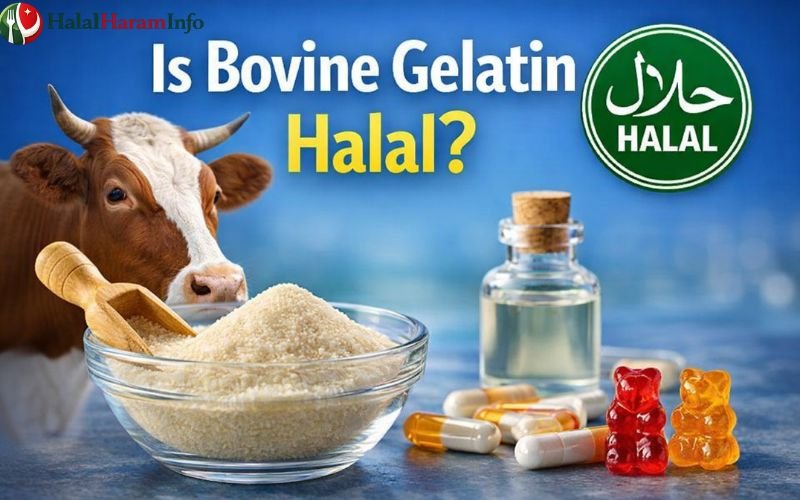
Bovine gelatin is a common ingredient found in foods, medicines, and cosmetics. For Muslims, its halal status is an important concern because it directly relates to dietary laws and religious obligations. Many everyday products contain gelatin, yet its source and processing are not always clearly labeled.
This makes it necessary to understand what bovine gelatin is, how it is produced, and how Islamic scholars evaluate its permissibility. This guide provides a detailed explanation in a clear and practical way so that you can make informed choices when buying or consuming products that contain gelatin.
What Is Bovine Gelatin?
Bovine gelatin is a protein derived from collagen, which is naturally present in cows. Collagen is a structural protein found in skin, bones, and connective tissues. When these parts are processed under heat and specific conditions, collagen breaks down into gelatin, a substance known for its ability to form a gel-like texture.
The production process typically involves several stages. First, raw materials such as cow bones and hides are cleaned thoroughly to remove impurities. Then, they are treated with acids or alkaline solutions to prepare the collagen for extraction. After that, the material is heated in water, which allows the collagen to dissolve and transform into gelatin. The resulting liquid is filtered, purified, dried, and turned into powder or sheets.
Gelatin has unique properties that make it valuable in many applications. It can thicken liquids, stabilize mixtures, and create a smooth texture. Because of these characteristics, it is widely used in both food and non-food industries. However, despite its usefulness, its halal status depends entirely on how and from where it is sourced.
Related Post: Is Beef Gelatin Halal or Haram?
Common Uses of Bovine Gelatin
Bovine gelatin is used in a wide range of products, often without consumers realizing it. It is valued for its ability to improve texture, consistency, and shelf life.
| Category | Examples |
| Food | Candies, marshmallows, yogurt, desserts |
| Pharmaceuticals | Capsules, tablets, supplements |
| Cosmetics | Creams, shampoos, face masks |
| Beverages | Juice clarification, soft drinks |
In the food industry, gelatin is commonly found in sweets such as gummy candies and marshmallows, where it provides a chewy texture. It is also used in dairy products like yogurt to enhance thickness and stability. In pharmaceuticals, gelatin is often used to make capsule shells that dissolve easily in the stomach, making it easier to consume medications.
In cosmetics, gelatin is sometimes included in skincare and haircare products because of its protein content. In beverages, it may be used during processing to clarify liquids, although it may not remain in the final product.
Because gelatin is so widely used, understanding its halal status becomes essential for everyday consumption.
Is Bovine Gelatin Halal or Haram?
Short Answer:
Bovine gelatin is halal only if it comes from halal-slaughtered cows. Otherwise, it is considered haram or doubtful.
This answer reflects the general agreement among Islamic scholars. While cows are halal animals, the way they are slaughtered plays a critical role. If the slaughter does not follow Islamic guidelines, the resulting gelatin is not considered permissible.
Related Post: Is Gelatin Halal or Haram?
Key Factors That Determine Halal Status
The permissibility of bovine gelatin depends on several important factors. Each of these must be carefully considered before making a decision.
1. Source of the Cow
The first and most important factor is the source of the animal. In Islam, cows are permissible animals, but they must be slaughtered according to Islamic law for their meat and by-products to be halal.
| Source Condition | Halal Status |
| Halal-slaughtered cow | Halal |
| Non-halal slaughter | Haram |
| Unknown source | Doubtful |
If the cow is slaughtered properly, the gelatin derived from it is considered halal. However, if the slaughter is done without following Islamic requirements, the gelatin becomes impermissible. When the source is unknown, it falls into a doubtful category, and many Muslims choose to avoid it.
2. Slaughter Method
Islamic slaughter, also known as Zabiha, involves specific conditions. The name of Allah must be mentioned at the time of slaughter, and the animal’s blood must be properly drained. The process must also be humane, ensuring that the animal suffers as little as possible.
If these conditions are not met, the animal is not considered halal, even if it is a permissible species like a cow. This directly affects the status of any by-products, including gelatin.
3. Transformation Process (Istihalah)
A key discussion among scholars is whether gelatin undergoes Istihalah, which refers to a complete transformation of a substance into something entirely different.
There are two main scholarly opinions on this issue:
| Opinion | Explanation | Ruling |
| Majority view | Gelatin does NOT fully transform | Haram if source is haram |
| Minority view | Complete transformation occurs | May be considered halal |
The majority of scholars believe that gelatin does not undergo a complete transformation, meaning its original source still matters. Therefore, if the source is not halal, the gelatin remains impermissible. A minority of scholars argue that the transformation is complete and changes the ruling, but this view is less commonly followed.
Because of this difference, bovine gelatin from non-halal sources is often considered doubtful and avoided by cautious consumers.
4. Manufacturing Process
Even if the source and slaughter are halal, the manufacturing process can affect the final ruling. Cross-contamination is a major concern in food production.
For example, if the same equipment is used to process both bovine and porcine gelatin, there is a risk of contamination. Similarly, mixing gelatin with non-halal ingredients can make the final product impermissible.
This is why halal certification is important. It ensures that the entire process, from sourcing to production, meets Islamic standards.
Types of Gelatin and Their Halal Status
| Type of Gelatin | Source | Halal Status |
| Bovine Gelatin | Cow | Depends on slaughter |
| Porcine Gelatin | Pig | Haram |
| Fish Gelatin | Fish | Halal |
| Plant-based (agar) | Seaweed/plants | Halal |
Porcine gelatin is always haram because pigs are not permissible in Islam. Fish gelatin is generally considered halal because fish do not require slaughter in the same way as land animals. Plant-based alternatives are also fully halal and widely accepted.
Is Bovine Gelatin Halal Without Certification?
In many cases, products containing bovine gelatin do not have halal certification. This creates uncertainty for consumers.
Without certification, it is difficult to verify:
- Whether the cow was slaughtered according to Islamic law
- Whether the production process was free from contamination
- Whether the ingredients meet halal standards
Because of this uncertainty, many scholars recommend avoiding such products unless there is clear evidence of permissibility. Halal certification provides reassurance by confirming that all requirements have been met.
How to Identify Halal Bovine Gelatin
Identifying halal gelatin requires careful attention and a few practical steps.
1. Check the Label
Always read the ingredient list and look for terms like “halal gelatin” or “halal certified.” Some products clearly mention the source of gelatin, which can help in making a decision.
2. Research the Manufacturer
Manufacturers often provide detailed information on their websites. You can also contact customer support to ask about the source and processing of gelatin.
3. Look for Halal Logos
Recognized halal certification bodies place logos on products that meet their standards. These logos are a reliable indicator of halal compliance.
4. Be Aware of Hidden Ingredients
Gelatin may appear under different names or be included in complex ingredients. Being aware of this helps in making better choices.
Halal Alternatives to Bovine Gelatin
For those who prefer to avoid any doubt, there are several halal alternatives available.
| Alternative | Source | Usage |
| Agar-agar | Seaweed | Desserts, jellies |
| Pectin | Fruits | Jams, candies |
| Carrageenan | Seaweed | Dairy products |
| Fish gelatin | Fish | Capsules, sweets |
These alternatives provide similar functionality without the concerns associated with animal-derived gelatin. Agar-agar and pectin are especially popular in cooking and baking.
Why Gelatin Is a Concern for Muslims
Gelatin is often hidden in products, making it difficult to identify. Many processed foods do not clearly state the source of gelatin, which creates confusion.
Common concerns include:
- Lack of transparency in labeling
- Use of non-halal animal sources
- Complex manufacturing processes
Because of these issues, many Muslims prefer to stick to halal-certified products or avoid gelatin altogether unless its source is clearly stated.
Scholarly Perspectives
Islamic scholars generally agree on the core principles regarding gelatin. If the source is halal and the slaughter is done correctly, the gelatin is permissible. If the source is haram, such as pork or improperly slaughtered animals, it is not allowed.
The debate around transformation adds complexity, but the majority opinion remains cautious. For everyday practice, many scholars advise choosing the safer option, especially when alternatives are available.
Quick Halal Verdict Table
| Condition | Verdict |
| Halal-slaughtered bovine gelatin | Halal |
| Non-halal slaughter | Haram |
| Unknown source | Doubtful |
| Certified halal product | Halal |
Real-Life Examples
1. Halal-Certified Candy
If a product clearly states that it uses halal-certified bovine gelatin, it is considered permissible and safe to consume.
2. Imported Marshmallows
If the packaging does not mention the source of gelatin, the product becomes doubtful and is often avoided.
3. Pharmaceutical Capsules
Many medicines use gelatin capsules. If halal options are available, they are preferred. In cases of necessity, some scholars allow their use if no alternatives exist.
FAQs
1. Is all bovine gelatin halal?
No, it is only halal if it comes from cows that were slaughtered according to Islamic law.
2. Is bovine gelatin better than pork gelatin?
Yes, because it has the potential to be halal, while pork gelatin is always haram.
3. Can Muslims eat products with bovine gelatin?
Yes, but only when the gelatin is confirmed halal or certified.
4. Is gelatin in medicine halal?
If no halal alternative is available and the medicine is necessary, some scholars allow it under the principle of necessity.
5. What is the safest alternative to gelatin?
Plant-based options like agar-agar and pectin are the safest choices.
6. Does cooking change gelatin’s halal status?
No, cooking does not change the ruling of gelatin.
Final Verdict
Bovine gelatin is not automatically halal. Its permissibility depends on the source of the cow, the method of slaughter, and the manufacturing process.
Bottom Line:
- ✅ Halal if sourced from properly slaughtered cows
- ❌ Haram if from non-halal slaughter
- ⚠️ Doubtful if the source is unknown
For complete peace of mind, choosing halal-certified products or plant-based alternatives is the safest and most reliable approach.
