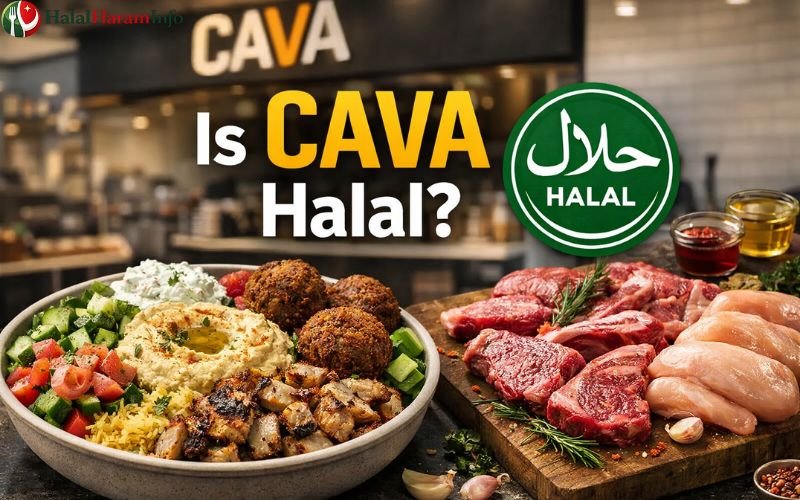
CAVA is a fast-casual Mediterranean restaurant chain known for customizable bowls, pitas, and salads made with fresh ingredients. As the brand continues to expand across the United States, many Muslim customers are asking an important question: Is CAVA halal?
For observant Muslims, halal dietary guidelines are not simply preferences but religious obligations. These rules govern how animals are slaughtered, how food is prepared, and how cross-contamination is avoided. While Mediterranean cuisine often features ingredients that may appear halal-friendly—such as vegetables, grains, legumes, and grilled meats—the actual halal status depends on sourcing, certification, and preparation practices.
This article provides detailed, factual information about CAVA’s halal status, ingredients, meat sourcing, cross-contact concerns, and practical guidance for Muslim diners.
What Does Halal Mean in Food?
Before evaluating CAVA’s menu, it is essential to understand what halal requires.
In Islamic dietary law:
- Meat must come from a halal animal (such as chicken, beef, or lamb).
- The animal must be slaughtered according to Islamic guidelines (zabiha).
- Pork and its by-products are strictly prohibited.
- Alcohol and intoxicants are not allowed.
- Cross-contamination with non-halal items must be avoided.
For meat to be considered fully halal, it must be certified by a recognized halal certification authority. Without certification or confirmed sourcing, meat cannot automatically be assumed halal—even if it is not pork.
Is CAVA Halal Certified?
As of the most recent publicly available information, CAVA is not a halal-certified restaurant chain nationwide.
This means:
- The company does not advertise halal certification.
- Meat served at most locations is not confirmed as zabiha halal.
- There is no company-wide guarantee that meat meets Islamic slaughter standards.
Because CAVA operates hundreds of locations across the U.S., ingredient sourcing may vary by region. However, there is no official statement from CAVA confirming that their chicken, lamb, steak, or other meats are halal-certified across all locations.
For strict halal observers, this generally means that CAVA meat options should not be considered halal unless a specific location independently confirms certified halal sourcing.
Overview of CAVA’s Menu
CAVA specializes in Mediterranean-style bowls and pitas with customizable ingredients.
Common menu categories include:
| Category | Examples |
| Bases | Saffron basmati rice, brown rice, greens, right rice |
| Proteins | Grilled chicken, spicy lamb meatballs, steak, falafel |
| Dips & Spreads | Hummus, tzatziki, harissa, roasted eggplant |
| Toppings | Tomato-cucumber salad, pickled onions, olives |
| Dressings | Lemon herb tahini, yogurt dill, garlic dressing |
While many plant-based ingredients are naturally halal, the halal status of animal-based proteins depends entirely on sourcing and preparation.
Are CAVA Meats Halal?
CAVA typically offers:
- Grilled Chicken
- Spicy Lamb Meatballs
- Braised Lamb
- Steak
There is no nationwide confirmation that these meats are halal-certified. Without explicit halal certification:
- The method of slaughter is unknown.
- The meat may not meet Islamic zabiha standards.
- Cross-contact with non-halal items may occur during preparation.
Because halal status depends on proper slaughter and certification, most Muslim scholars advise avoiding meat from restaurants that are not clearly halal-certified.
If you are considering eating meat at CAVA, the safest approach is to contact the specific location directly and ask:
- Is your meat halal-certified?
- Who supplies your meat?
- Do you have documentation of halal certification?
Unless clear confirmation is provided, the meat should not be assumed halal.
Related Post: Is Dave’s Hot Chicken Halal?
Is CAVA Falafel Halal?
Falafel is one of the most popular plant-based protein options at CAVA. Traditionally made from chickpeas, herbs, and spices, falafel itself does not contain meat or pork.
However, two factors must be considered:
- Ingredients – Falafel is typically halal-friendly as it contains no animal products.
- Preparation Method – It may be fried in shared oil used for non-halal items.
If falafel is prepared in oil that also cooks non-halal meat products, some scholars consider this cross-contact problematic.
For most Muslims, falafel at CAVA is considered a safer option than meat, but confirmation about shared fryers may provide additional reassurance.
Vegetarian and Vegan Options at CAVA
For Muslims avoiding doubtful meat, vegetarian and vegan menu items are generally the safest choice.
Halal-friendly options may include:
- Saffron basmati rice
- Brown rice
- Mixed greens
- Hummus
- Roasted eggplant dip
- Falafel
- Tomato-cucumber salad
- Pickled vegetables
- Tahini-based dressings
These items do not contain pork or alcohol in their basic form. However, ingredients and preparation practices can vary.
Here is a simplified overview:
| Item Type | Generally Halal? | Notes |
| Plant-based bases | Yes | Verify no alcohol-based additives |
| Falafel | Usually | Confirm fryer use |
| Hummus & spreads | Usually | Check for cross-contact |
| Yogurt sauces | Depends | Verify no alcohol flavoring |
| Meat proteins | Not confirmed | No nationwide halal certification |
For observant Muslims, a fully vegetarian bowl may be the most reliable option at CAVA.
Cross-Contamination Considerations
Cross-contamination is an important factor when determining halal suitability.
At fast-casual restaurants like CAVA:
- Ingredients are assembled along a service line.
- Serving utensils may be used in close proximity.
- Meat and vegetarian items are stored near each other.
- Gloves may not always be changed between orders.
Although pork is not a central ingredient at CAVA, cross-contact between non-halal meat and vegetarian items can still occur.
Muslim customers concerned about cross-contact can:
- Politely request fresh gloves.
- Ask staff to use clean utensils.
- Choose items placed farther from meat trays.
- Avoid peak hours when cross-contact risk may be higher.
Does CAVA Serve Pork?
CAVA’s Mediterranean-focused menu does not prominently feature pork as a primary protein. However, ingredient sourcing and limited-time offerings can vary by location.
While pork is not widely marketed as a main protein at CAVA, absence of pork does not automatically mean the restaurant is halal. Halal compliance depends on slaughter method and certification, not just avoiding pork.
Always verify ingredients directly with staff if pork avoidance is your primary concern.
How to Confirm Halal Status at Your Local CAVA
Because CAVA does not provide nationwide halal certification, verification must be done location by location.
Steps to take:
- Visit the official CAVA website.
- Contact the local branch directly.
- Ask about halal certification documentation.
- Inquire about meat suppliers.
- Confirm preparation procedures.
If the staff cannot provide written certification or clear confirmation, it is safest to assume the meat is not halal.
Comparison: CAVA and Other Mediterranean Chains
Many Mediterranean chains operate in the United States. However, halal policies differ widely.
For example:
- The Halal Guys markets itself as fully halal-certified.
- Naf Naf Grill does not advertise nationwide halal certification.
- Roti Mediterranean varies by location.
Compared to chains that explicitly advertise halal certification, CAVA does not position itself as a halal restaurant brand.
Muslims seeking fully certified halal Mediterranean food may prefer restaurants that clearly state halal compliance on their website and storefront.
Can Muslims Eat at CAVA?
The answer depends on your level of religious observance and interpretation.
Strict Zabiha Observers
- Should avoid meat unless certification is confirmed.
- May choose vegetarian options only.
- Should verify cross-contact procedures.
Muslims Avoiding Pork Only
- May feel comfortable eating non-pork items.
- Should still verify ingredients.
Flexible Interpretation
- Some Muslims may eat meat from non-certified restaurants if no pork is present.
- This depends on personal conviction and scholarly guidance.
Because Islamic dietary standards vary among individuals, the final decision is personal.
Frequently Asked Questions (FAQs)
Is CAVA chicken halal?
There is no nationwide confirmation that CAVA chicken is halal-certified. It should not be assumed halal without verification from the specific location.
Does CAVA offer halal meat in certain states?
There is no public company-wide announcement confirming halal meat in specific states. Individual locations may differ, but confirmation must be obtained directly.
Is CAVA lamb halal?
CAVA’s lamb is not advertised as halal-certified nationally. Without certification, it cannot be considered halal.
Is falafel at CAVA halal?
Falafel ingredients are typically halal-friendly. However, cross-contact and shared fryers should be confirmed.
Does CAVA serve alcohol?
CAVA locations may sell alcoholic beverages depending on local licensing. Alcohol in drinks does not automatically affect food halal status but may concern some customers.
Is CAVA suitable for Muslim families?
Muslim families can eat vegetarian items safely in most cases. Meat options require verification.
Final Verdict: Is CAVA Halal?
CAVA is not a halal-certified restaurant chain across the United States. There is no official confirmation that its meat is slaughtered according to Islamic guidelines. Therefore:
- Meat options should not be assumed halal.
- Vegetarian and plant-based options are generally safer.
- Cross-contact should be considered.
- Verification at the local level is recommended.
For Muslims who strictly follow halal dietary laws, choosing vegetarian items or dining at fully certified halal restaurants is the safest approach.
If halal certification is essential for you, contacting your local CAVA branch directly remains the most reliable method for confirmation.
