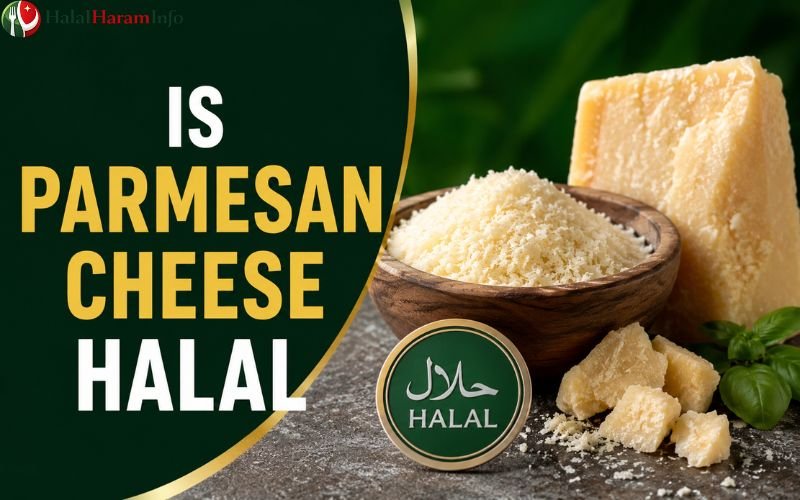
Parmesan cheese is one of the most popular hard cheeses in the world. It is widely used in pasta, pizza, salads, soups, and many packaged foods. Muslims often ask an important question before consuming it: is parmesan cheese halal?
The answer is not always simple. Some parmesan cheese can be halal, while other types may be haram or doubtful depending on the ingredients and production method used.
This detailed guide explains the halal status of parmesan cheese, its ingredients, how it is made, common concerns, and how Muslims can identify halal-safe options.
What Is Parmesan Cheese?
Parmesan cheese is a hard, aged cheese originally from Italy. Authentic parmesan is commonly known as Parmigiano-Reggiano. It has a salty, nutty flavor and a firm texture.
Parmesan cheese is commonly made from:
- Cow’s milk
- Salt
- Starter cultures
- Rennet
The biggest halal concern usually comes from the rennet used during the cheese-making process.
Quick Answer: Is Parmesan Cheese Halal?
| Situation | Halal Status |
| Parmesan made with microbial or plant-based rennet | Usually halal |
| Parmesan made with halal-certified animal rennet | Halal |
| Parmesan made with non-halal animal rennet | Haram |
| Parmesan with unknown rennet source | Doubtful (Mashbooh) |
Because many traditional parmesan cheeses use animal rennet, Muslims should always check the ingredient source or halal certification before eating it.
Why Rennet Matters in Parmesan Cheese
Rennet is an enzyme used to separate milk into curds and whey during cheese production. It plays a major role in determining whether parmesan cheese is halal.
There are several types of rennet:
| Type of Rennet | Source | Halal Status |
| Animal rennet | From calf stomach lining | Depends on slaughter method |
| Microbial rennet | Produced by microorganisms | Halal |
| Vegetable rennet | Plant-based enzymes | Halal |
| Fermentation-produced rennet | Laboratory fermentation | Usually halal |
Traditional parmesan often uses animal rennet, especially authentic Italian Parmigiano-Reggiano.
If the calf was not slaughtered according to Islamic guidelines, the cheese may not be halal according to many scholars.
Is Traditional Parmigiano-Reggiano Halal?
Authentic Parmigiano-Reggiano is usually made using calf rennet. This creates concern for Muslim consumers.
Important Facts About Parmigiano-Reggiano
| Feature | Information |
| Origin | Italy |
| Protected status | PDO (Protected Designation of Origin) |
| Typical rennet used | Animal rennet |
| Aging period | 12–36 months |
| Halal certified | Rarely |
Most traditional Parmigiano-Reggiano is not considered halal by strict Islamic dietary standards because the animal rennet source is usually not halal-certified.
Some scholars may allow it under certain interpretations, but many Muslims prefer avoiding it unless halal certification is present.
Related Post: Is Turkey Bacon Halal or Haram?
What Do Islamic Scholars Say About Cheese and Rennet?
Islamic scholars have discussed cheese and rennet for centuries. Different opinions exist among scholars and schools of thought.
Common Scholarly Opinions
| Opinion | Explanation |
| Strict view | Cheese made with non-halal animal rennet is haram |
| Lenient view | Some scholars allow rennet because it transforms during processing |
| Safer approach | Choose halal-certified cheese |
Because of these differing opinions, many Muslims prefer choosing clearly halal-certified parmesan cheese to avoid doubt.
Ingredients in Parmesan Cheese
Most parmesan cheese contains only a few ingredients, but some may create halal concerns.
Typical Parmesan Ingredients
| Ingredient | Halal Concern |
| Milk | Usually halal |
| Salt | Halal |
| Bacterial cultures | Usually halal |
| Rennet | Main concern |
| Lipase enzymes | Sometimes animal-derived |
| Anti-caking agents | Usually halal |
Packaged grated parmesan may also include preservatives or cellulose powder, which are generally halal but should still be checked.
Is Kraft Parmesan Cheese Halal?
Kraft Heinz products vary by region and recipe. Some Kraft parmesan products use microbial enzymes, while others may use animal-derived enzymes.
Before Buying Kraft Parmesan
Check for:
- Halal certification
- Microbial enzymes listed on ingredients
- Statement about animal rennet
Because formulations can change by country, always verify the package label.
Related Post: Is Hi-Chew Halal or Haram?
Is Parmesan Cheese in Pizza Halal?
Many pizzas use parmesan or parmesan-style cheese. Whether it is halal depends on the cheese source.
Pizza Parmesan Halal Status
| Pizza Type | Possible Halal Status |
| Halal-certified restaurant pizza | Usually halal |
| Fast-food pizza | Depends on supplier |
| Frozen pizza | Check ingredients |
| Italian restaurant parmesan | Often uses animal rennet |
Even if the pizza toppings are halal, the cheese itself may not be.
Is Vegetarian Parmesan Halal?
Vegetarian parmesan is usually considered halal because it commonly uses microbial or plant-based rennet instead of animal rennet.
Signs a Parmesan Is More Likely Halal
- Labeled “vegetarian”
- Uses microbial enzymes
- Halal-certified logo
- States “animal-free rennet”
However, checking certification is still the safest option.
Difference Between Halal and Non-Halal Parmesan
| Feature | Halal Parmesan | Non-Halal Parmesan |
| Rennet source | Microbial or halal animal | Non-halal animal |
| Certification | Halal-certified | No halal verification |
| Suitable for Muslims | Yes | No or doubtful |
| Production standards | Islamic dietary compliant | Standard commercial process |
How to Identify Halal Parmesan Cheese
Finding halal parmesan becomes easier when you know what to look for.
Checklist for Muslim Consumers
1. Look for Halal Certification
A halal logo from a trusted organization is the easiest way to confirm permissibility.
2. Check the Rennet Source
Look for terms like:
- Microbial enzymes
- Vegetarian rennet
- Plant enzymes
3. Avoid Unclear Labels
If the package only says “enzymes” without explanation, the source may be unclear.
4. Contact the Manufacturer
Many companies provide ingredient details through customer support.
Is Parmesan Cheese Haram?
Parmesan cheese is not automatically haram. The ruling depends mainly on the enzyme source.
Parmesan May Be Haram If:
- It uses non-halal animal rennet
- It contains animal enzymes from improperly slaughtered animals
- It includes alcohol-based flavorings
Parmesan May Be Halal If:
- It uses microbial or vegetable rennet
- It is halal-certified
- All ingredients meet Islamic dietary rules
Related Post: Is Rennet Halal or Haram? (2026)
Can Muslims Eat Parmesan Cheese?
Muslims can eat parmesan cheese if it meets halal standards.
Recommended Approach
| Situation | Recommendation |
| Halal-certified parmesan | Safe to consume |
| Vegetarian parmesan | Usually acceptable |
| Unknown enzyme source | Better to avoid |
| Authentic Parmigiano-Reggiano | Research carefully |
Choosing halal-certified cheese helps avoid uncertainty.
Popular Halal-Friendly Parmesan Alternatives
Some Muslims prefer alternatives that clearly avoid animal rennet.
Common Alternatives
| Cheese Type | Usually Halal-Friendly |
| Vegetarian parmesan | Yes |
| Vegan parmesan | Yes |
| Microbial enzyme parmesan | Yes |
| Dairy-free parmesan substitute | Yes |
These products are becoming easier to find in supermarkets and online stores.
Parmesan Cheese in Packaged Foods
Parmesan is often hidden inside processed foods.
Foods That May Contain Parmesan
- Pasta sauces
- Caesar salads
- Chips and snacks
- Frozen meals
- Breadsticks
- Soup mixes
Always check ingredient labels because parmesan may contain non-halal enzymes.
Is Parmesan Cheese Kosher and Halal the Same?
Some people assume kosher cheese is automatically halal, but that is not always true.
Kosher vs Halal Parmesan
| Feature | Kosher | Halal |
| Religious standard | Jewish dietary law | Islamic dietary law |
| Animal slaughter rules | Different method | Islamic slaughter required |
| Alcohol restrictions | Less strict in some cases | Strict |
| Automatically halal? | No | — |
Kosher certification does not guarantee halal compliance.
Health Benefits of Parmesan Cheese
Parmesan cheese can provide several nutritional benefits when consumed in moderation.
Nutritional Benefits
| Nutrient | Benefit |
| Protein | Supports muscles |
| Calcium | Strengthens bones |
| Vitamin B12 | Supports nerves |
| Phosphorus | Helps bone health |
| Low lactose | Easier for some people to digest |
However, parmesan is also high in sodium, so moderation is important.
Related Post: Is Tyson Chicken Halal or Haram?
FAQs
Is parmesan cheese always made with animal rennet?
No. Some brands use microbial or vegetable rennet instead of animal-based enzymes.
Is authentic Parmigiano-Reggiano halal?
Traditional Parmigiano-Reggiano usually uses calf rennet and may not be halal unless certified.
Can Muslims eat vegetarian parmesan?
Yes, vegetarian parmesan is generally considered halal because it avoids animal rennet.
Is parmesan cheese on pizza halal?
It depends on the cheese supplier and whether halal ingredients are used.
What does microbial rennet mean?
Microbial rennet is produced from microorganisms instead of animals and is generally halal.
Is vegan parmesan halal?
Vegan parmesan is usually halal because it contains no animal ingredients.
Are all cheese enzymes haram?
No. Microbial and plant enzymes are usually halal. Animal enzymes depend on the animal source and slaughter method.
Tips for Buying Halal Parmesan Cheese
Smart Shopping Tips
- Buy halal-certified brands whenever possible
- Choose vegetarian parmesan for safer options
- Read ingredient labels carefully
- Avoid products with unclear enzyme sources
- Research imported Italian cheeses before buying
These steps help Muslims make informed food choices.
Final Words
Parmesan cheese can be halal or haram depending on how it is made.
Traditional parmesan often uses animal rennet from calves that may not be slaughtered according to Islamic law. Because of this, many authentic parmesan cheeses are considered doubtful or non-halal by many Muslim consumers.
However, parmesan made with microbial, vegetarian, or halal-certified rennet is generally permissible to eat.
For the safest choice, Muslims should look for:
- Halal certification
- Vegetarian labels
- Microbial enzyme ingredients
Checking labels carefully helps ensure the parmesan cheese aligns with Islamic dietary requirements.
