
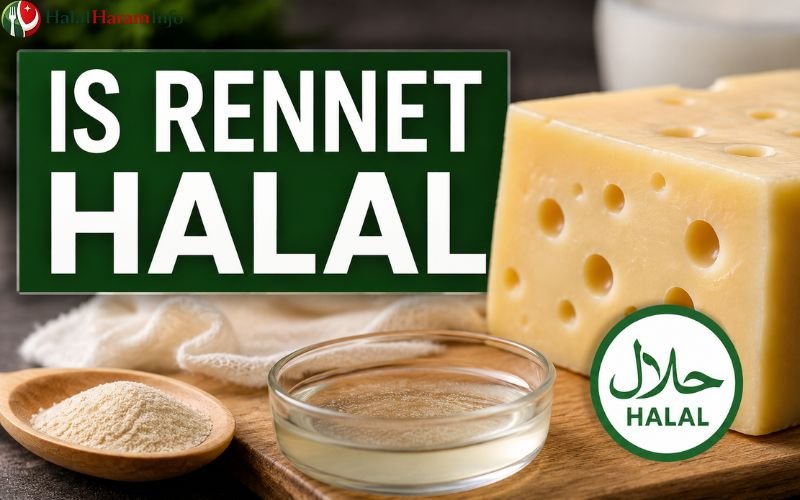
Rennet is an important ingredient used in the production of many cheeses around the world. For Muslims, one common concern is whether rennet is halal or haram. Since rennet can come from animal sources, its halal status depends on how it is produced and where it comes from.
Understanding rennet is important because it is found in many everyday dairy products, especially cheese. Some cheeses use halal-friendly rennet, while others may use ingredients that do not meet Islamic dietary requirements.
This detailed guide explains what rennet is, how it is made, the different types of rennet, and whether Muslims can consume products containing it.
What Is Rennet?
Rennet is a substance used to coagulate milk during the cheese-making process. It helps separate milk into solid curds and liquid whey.
Without rennet, many traditional cheeses would not form properly.
Main Purpose of Rennet
| Function | Explanation |
| Coagulates milk | Helps milk thicken and form curds |
| Cheese production | Essential for making many cheeses |
| Improves texture | Gives cheese its firmness and consistency |
| Enhances flavor | Supports aging and flavor development |
Rennet has been used in cheese-making for centuries.
What Is Rennet Made From?
Rennet can come from several different sources.
Types of Rennet
| Type of Rennet | Source | Halal Status |
| Animal rennet | Stomach lining of calves or animals | Depends on slaughter method |
| Microbial rennet | Produced by fungi or bacteria | Usually halal |
| Vegetable rennet | Plants like thistle or nettles | Halal |
| Fermentation-produced rennet | Genetically engineered microbes | Usually halal |
The halal ruling depends mainly on the source and processing method.
Is Rennet Halal?
Rennet can be halal, but not all rennet is halal.
The halal status depends on:
- The source animal
- Whether the animal was slaughtered according to Islamic law
- Whether contamination occurred during processing
- The type of rennet used
General Rule
| Rennet Type | Usually Halal? |
| Vegetable rennet | Yes |
| Microbial rennet | Yes |
| Synthetic rennet | Usually yes |
| Animal rennet from halal-slaughtered animals | Yes |
| Animal rennet from non-halal slaughtered animals | Disputed among scholars |
Because of these differences, Muslims often check cheese labels carefully.
Related Post: Is Tyson Chicken Halal or Haram?
What Is Animal Rennet?
Animal rennet traditionally comes from the stomach lining of young calves.
The enzyme responsible for coagulating milk is called chymosin.
Why Animal Rennet Raises Concerns
Animal rennet becomes questionable when:
- The animal is not halal
- The animal is not slaughtered according to Islamic law
- The source is unknown
This is why many Muslims prefer cheeses made with microbial or vegetable rennet.
Is Animal Rennet Halal?
Islamic scholars have different opinions regarding animal rennet.
Opinion 1: Halal Only if Properly Slaughtered
Many scholars believe animal rennet is halal only when:
- The animal itself is halal
- It is slaughtered according to Islamic rules
If these conditions are not met, the rennet is considered haram.
Opinion 2: Rennet Is Permissible Even From Non-Halal Slaughter
Some scholars argue that rennet itself remains pure because it is an enzyme extracted from the stomach and undergoes transformation during processing.
This opinion is followed by some Islamic schools of thought.
Summary Table
| Scholarly Opinion | Ruling |
| Strict view | Only halal-slaughtered animal rennet is halal |
| Lenient view | Some non-halal animal rennet may still be permissible |
Because of differing opinions, many Muslims choose halal-certified cheese to avoid doubt.
What Is Microbial Rennet?
Microbial rennet is produced using bacteria, fungi, or mold instead of animals.
It is widely used today because it is:
- Cheaper
- Vegetarian-friendly
- Easier to mass produce
Is Microbial Rennet Halal?
Yes, microbial rennet is generally considered halal because it does not come from animals.
Many halal-certified cheeses use microbial rennet.
What Is Vegetable Rennet?
Vegetable rennet comes from plant sources such as:
- Artichokes
- Thistles
- Fig leaves
- Nettle plants
It is commonly used in specialty and vegetarian cheeses.
Related Post: Is Cane’s Halal or Haram?
Is Vegetable Rennet Halal?
Vegetable rennet is considered halal because it comes entirely from plants.
Fermentation-Produced Rennet
Modern cheese-making often uses fermentation-produced chymosin (FPC).
This enzyme is made through biotechnology using microorganisms.
Is Fermentation Rennet Halal?
Most Islamic scholars consider fermentation-produced rennet halal if:
- The ingredients used are halal
- No haram contamination occurs during production
Many halal-certified cheeses use this type of rennet today.
Why Rennet Matters in Cheese
Not all cheeses contain the same type of rennet.
Some cheeses use animal rennet, while others use microbial or vegetable alternatives.
Common Cheeses That May Contain Animal Rennet
| Cheese Type | Possible Rennet Source |
| Parmesan | Often animal rennet |
| Romano | Often animal rennet |
| Gruyère | May contain animal rennet |
| Gorgonzola | Sometimes animal rennet |
| Traditional cheddar | Can vary |
Cheeses More Likely to Use Microbial Rennet
| Cheese Type | Common Rennet Type |
| Mozzarella | Often microbial |
| Cream cheese | Usually microbial |
| Cottage cheese | Often microbial |
| Processed cheese | Usually microbial |
Always check labels because ingredients vary by brand.
Related Post: Are Pop-Tarts Halal or Haram?
How to Identify Halal Rennet
1. Look for Halal Certification
The easiest way to verify halal status is to check for halal certification on the packaging.
2. Check the Ingredient List
Look for terms such as:
- Microbial enzymes
- Vegetable rennet
- Vegetarian rennet
Avoid products with vague terms like:
- Enzymes
- Animal enzymes
- Traditional rennet
unless further clarification is available.
3. Contact the Manufacturer
Many companies provide ingredient information upon request.
Is Cheese With Rennet Halal?
Cheese can be halal if the rennet used is halal.
Cheese Halal Status Table
| Cheese Situation | Halal Status |
| Made with vegetable rennet | Halal |
| Made with microbial rennet | Halal |
| Made with halal animal rennet | Halal |
| Made with questionable animal rennet | Disputed |
| Halal-certified cheese | Halal |
Why Many Muslims Prefer Halal-Certified Cheese
Halal certification removes uncertainty regarding:
- Rennet source
- Production process
- Cross-contamination
- Additional ingredients
This makes shopping easier for Muslim consumers.
Does Vegetarian Mean Halal?
Not always.
Vegetarian cheese may avoid animal rennet, but other ingredients or processing aids could still require verification.
However, vegetarian cheeses are generally more likely to be halal-friendly.
Popular Cheese Brands and Rennet
Different brands use different types of rennet.
Examples
| Brand Type | Common Rennet Source |
| Traditional European cheeses | Often animal rennet |
| Vegetarian cheeses | Vegetable or microbial |
| Halal-certified brands | Halal microbial or halal animal rennet |
Recipes and production methods can change over time.
Is Parmesan Cheese Halal?
Traditional Parmesan usually uses animal rennet.
Because of this, many Muslims avoid non-halal-certified Parmesan unless the source of rennet is confirmed halal.
Is Mozzarella Cheese Halal?
Mozzarella is often made with microbial rennet, especially in commercial products.
However, checking certification is still recommended.
Are Cheese Enzymes Halal?
Cheese enzymes may or may not be halal depending on their source.
Types of Cheese Enzymes
| Enzyme Source | Halal Status |
| Plant-based | Halal |
| Microbial | Halal |
| Halal animal source | Halal |
| Unknown animal source | Questionable |
Cross-Contamination Concerns
Even if rennet itself is halal, some Muslims also consider:
- Shared equipment
- Non-halal additives
- Processing contamination
Halal-certified facilities help reduce these concerns.
Islamic Perspective on Doubtful Foods
Islam encourages Muslims to avoid doubtful matters when possible.
For this reason, many Muslims prefer:
- Halal-certified cheese
- Vegetarian cheese
- Microbial rennet products
This approach provides greater confidence in food choices.
Benefits of Halal-Certified Cheese
| Benefit | Explanation |
| Religious assurance | Meets Islamic dietary rules |
| Ingredient transparency | Clear information on enzymes |
| Better consumer trust | Certification increases confidence |
| Easier shopping | Reduces confusion |
Tips for Buying Halal Cheese
Read Labels Carefully
Check whether the product says:
- Halal certified
- Vegetarian rennet
- Microbial enzymes
Buy From Trusted Halal Brands
Muslim-owned or halal-certified brands usually provide clearer information.
Research Online
Many cheese manufacturers list enzyme details on their websites.
Ask Restaurants
Restaurant cheeses may contain animal rennet, so asking questions is important.
Related Post: Is Twizzlers Halal or Haram?
Frequently Asked Questions
Is rennet always haram?
No. Rennet can be halal if it comes from halal sources or microbial and vegetable sources.
Is microbial rennet halal?
Yes, microbial rennet is generally considered halal.
Is vegetable rennet halal?
Yes, vegetable rennet is halal because it comes from plants.
Can Muslims eat cheese with animal rennet?
It depends on the source of the rennet and the scholarly opinion followed.
Is Parmesan cheese halal?
Traditional Parmesan often uses animal rennet and may not be halal unless certified.
Is vegetarian cheese halal?
Usually, but certification is still recommended.
How do I know if rennet is halal?
Look for halal certification or ingredient labels stating microbial or vegetable rennet.
Is cheese without halal certification haram?
Not necessarily, but its halal status may remain uncertain depending on the ingredients used.
Final Thoughts
Rennet is not automatically halal or haram. Its halal status depends on the source and production method.
- Vegetable rennet is halal
- Microbial rennet is generally halal
- Fermentation-produced rennet is usually halal
- Animal rennet may be halal or questionable depending on slaughter practices
Because many cheeses contain rennet from different sources, Muslim consumers should carefully check labels and choose halal-certified products whenever possible.
For the safest option, many Muslims prefer cheeses made with microbial or vegetable rennet and verified halal certification.
